

Published: November 18, 2026
This article is educational and general in nature. It is not insurance or legal advice, and it does not take your situation into account. Coverage terms differ by insurer, policy and state, and deposit rules are set state by state and change over time. Read your own policy documents, talk to a licensed agent about coverage, and consult a local tenant resource about a deposit dispute. Our full disclaimer applies to this article.
The dog found the loose edge by the closet and pulled up a strip of it. Or the cat picked one corner of the bedroom and kept going back, and the smell now rises through the padding. Your lease ends in a few weeks, and you are doing the math on your deposit.
Plenty of renters in that spot go looking for the same thing: does renters insurance cover pet damage to carpet? Usually not. The repair comes out of your deposit instead, though most states cap what a landlord can charge you for carpet that already had years of use on it.
- A standard policy pays for your own belongings and for injuries or damage your pet causes to other people. The landlord’s carpet is neither.
- The repair comes out of your security deposit or pet deposit instead.
- A pet fee and pet rent are not deposits, and rarely offset a damage charge.
- Most states let a landlord charge only the carpet’s depreciated value, not the price of a new one.
Coverage rules below come from state insurance regulators and the NAIC, and deposit rules from state statutes and tenant legal aid guides, checked in November 2026.
Does Renters Insurance Cover Pet Damage to Carpet?
No, in almost every case. Standard policies are built around two ideas, and carpet in a rental falls outside both.
Why the Answer Is Usually No
Think of your policy as two doors. Personal property coverage “pays to repair or replace personal belongings if they are damaged, destroyed, or stolen,” while liability insurance covers “bodily injury or property damage to others,” in the words of the NAIC.
Carpet goes through neither door. It is not your belonging, so door one stays shut. The landlord does count as someone else, but almost every policy excludes property damage caused by animals an insured owns, which closes door two. Insurers treat a pet chewing or soiling a floor as something a careful owner could have prevented, rather than the sudden accident a policy is designed for.
The ownership line runs the same way in reverse, according to the Illinois Department of Insurance: a landlord’s insurance “only protects the building structure, not your personal property.” Renters in r/Insurance who have called their carrier describe hearing exactly that.
The Narrow Exceptions
A few insurers sell a pet damage endorsement, sometimes called damage to landlord property coverage, and a small number write standalone pet damage policies. Keep your expectations low: limits tend to run in the hundreds of dollars per incident rather than the thousands, and the endorsement is not sold in every state. Much like GAP insurance on a car loan, it is an add-on that fills one specific hole rather than a broad upgrade. Read the exclusions section of your own policy, then ask your insurer what is available on it.
What Renters Insurance Does Cover When You Have a Pet
Quite a lot, just not your floor. Once your pet affects someone outside your household, the liability side of the policy comes into play.
Dog Bites and Injuries Your Pet Causes to Other People
This is the main reason pet owners carry the coverage at all. If your dog bites a visitor, personal liability can pay the legal costs and any damages you owe, while medical payments to others covers smaller medical bills without anyone proving fault. The liability section of what renters insurance covers explains how the two work together.
The sums are not small. The Insurance Information Institute counted 28,450 dog bite claims in 2025, up from 22,658 the year before, at an average of $65,450 per claim. Triple-I notes that “homeowners and renters insurance policies typically cover dog bite liability legal expenses, up to the liability limits,” which it puts at $100,000 to $300,000.
Damage Your Pet Causes to Someone Else’s Property
Liability reaches property as well as people. If your dog gets into a neighbor’s apartment and destroys their sofa, your policy may respond up to your limit. The landlord, despite owning the carpet, is carved out by the animal damage exclusion.
Your Belongings Damaged by a Covered Event
If a kitchen fire ruins your rug and your sofa, personal property coverage pays to repair or replace them, less your deductible, because a covered peril did the damage. Contrast that with your own dog chewing the leg off your own sofa: same sofa, same policy, no payout.
Breed Restrictions and Liability Limits
Some insurers restrict or decline coverage on breed or bite history, and regulators warn about it. The Texas Department of Insurance said in January 2026: “Some policies exclude certain breeds. To be sure, check your policy or call your insurance company.”
Triple-I reports the same from the industry side, noting that some companies “will not insure homeowners who own certain breeds of dogs categorized as dangerous.” Others apply a lower sub-limit to animal liability.
What Renters Insurance Doesn’t Cover for Pet Owners
Six things catch pet owners out most often, and a standard policy covers none of them:
- Pet damage to the rental unit. Carpet, hardwood, doors, trim and blinds belong to the landlord, and all come out of your deposit.
- Pet damage to your own belongings. The chewed sofa and the soaked mattress are yours to replace.
- Vet bills. Your pet’s medical care is what pet insurance exists for.
- Injuries to your own pet. If your dog is hurt, renters insurance has nothing to pay out on.
- Pest infestations. Fleas and the treatment that follows are maintenance, not an insured loss.
- Fines for breaking a no-pet lease. A penalty you agreed to is a contract issue, and no policy pays it.
That last one stings beyond the money, because keeping a pet your lease prohibits can also give a landlord grounds to end the tenancy.
Who Pays for Pet Damage to Carpet?

You do, in nearly every case. Renters in r/Insurify describe the chain as it works in practice: scratched floors, chewed trim and carpet stains come out of the security deposit rather than the policy.
Your Security Deposit Comes First
A landlord can deduct for damage beyond normal wear and tear, and in most states they have to show their work. Under RCW 59.18.280 in Washington, a landlord must give “a full and specific statement of the basis for retaining any of the deposit,” must “include copies of estimates received or invoices paid to reasonably substantiate damage charges,” and may not withhold a deposit “for wear resulting from ordinary use of the premises.”
Every state sets its own deadline for sending that statement, and missing it can cost a landlord the right to keep any of the deposit. Check your state’s rules.
Pet Deposit vs Pet Fee vs Pet Rent
Listings use these three interchangeably, and they are not the same thing. Which one your lease names decides whether the money ever comes back.
| Charge | Refundable? | What it can be used for | Notes |
|---|---|---|---|
| Pet deposit | Yes, minus lawful deductions | Pet damage beyond normal wear and tear | Returned under the same state rules as the security deposit |
| Pet fee | No | Nothing specific. A one-time charge for allowing the pet | Buys no credit against damage later |
| Pet rent | No | Nothing specific. A monthly add-on to rent | Covers expected extra wear, not your repair bill |
That middle row is where renters get hurt. One r/personalfinance poster billed for carpet their pet ruined found the $300 they paid at move-in was logged in the lease as a pet fee rather than a deposit, so none of it counted against the repair. Renters in r/Tenant put it plainly: a pet deposit does nothing for damage your pet causes unless the lease says it does.
A few states now regulate these charges. Colorado’s HB23-1068, in effect since 1 January 2024, caps a pet security deposit at $300, requires it to be refundable, and limits pet rent to the greater of $35 a month or 1.5% of the rent. Most states have no such cap.
When the Damage Costs More Than the Deposit
A landlord who runs out of deposit can bill you for the balance. Unpaid, it can go to a collection agency and land on your credit report, leaving you to improve your credit score afterwards, or the landlord can file in small claims court. Both routes give you a chance to dispute the amount first. If you end up putting the bill on a credit card, have a plan to pay off credit card debt faster so interest does not add to the cost.
Pet Damage vs Normal Wear and Tear: Carpet Examples

Normal wear and tear is what the carpet would have done anyway. Pet damage is what your animal did to it, and landlords can charge for the second and not the first. The Washington tenant guide published by the Northwest Justice Project draws the line directly, listing “a rug worn thin by ordinary use” as normal wear and “stains and odors in rug caused by pets, spills or leaks” as damage.
| Normal wear and tear | Pet damage |
|---|---|
| Traffic paths worn into high-use areas | Urine stains and lingering odor |
| Light fading from sun | Chewed edges and corners |
| Slight matting and furniture indentations | Clawed or pulled loops |
| Loose seams from age | Soaked padding and subfloor |
So are stains on carpet normal wear and tear? Fading, thinning and flattening are. A urine stain is not, because nothing about ordinary use produces it.
Here is the part that saves renters money. Carpet has a limited useful life, and in many states a landlord can only charge its depreciated value rather than the price of a brand-new replacement. The same guide states the rule flatly, that landlords “may only charge you for the remaining useful life of the item,” and puts a carpet’s lifespan at five to fifteen years.
An illustrative example. Say the carpet was four years old when you moved out, the landlord quotes $1,200 to replace it, and the useful life applied is eight years. Half that life was used up before the damage, so your share would be around $600. The figures are made up to show the method, and your right to depreciation depends on your state’s rules.
One renter in r/LandlordLove described a $770 bill after their final rent for carpet “prorated based on age of carpet.” The proration is the part working in their favor.
How to Protect Your Deposit as a Pet Owner
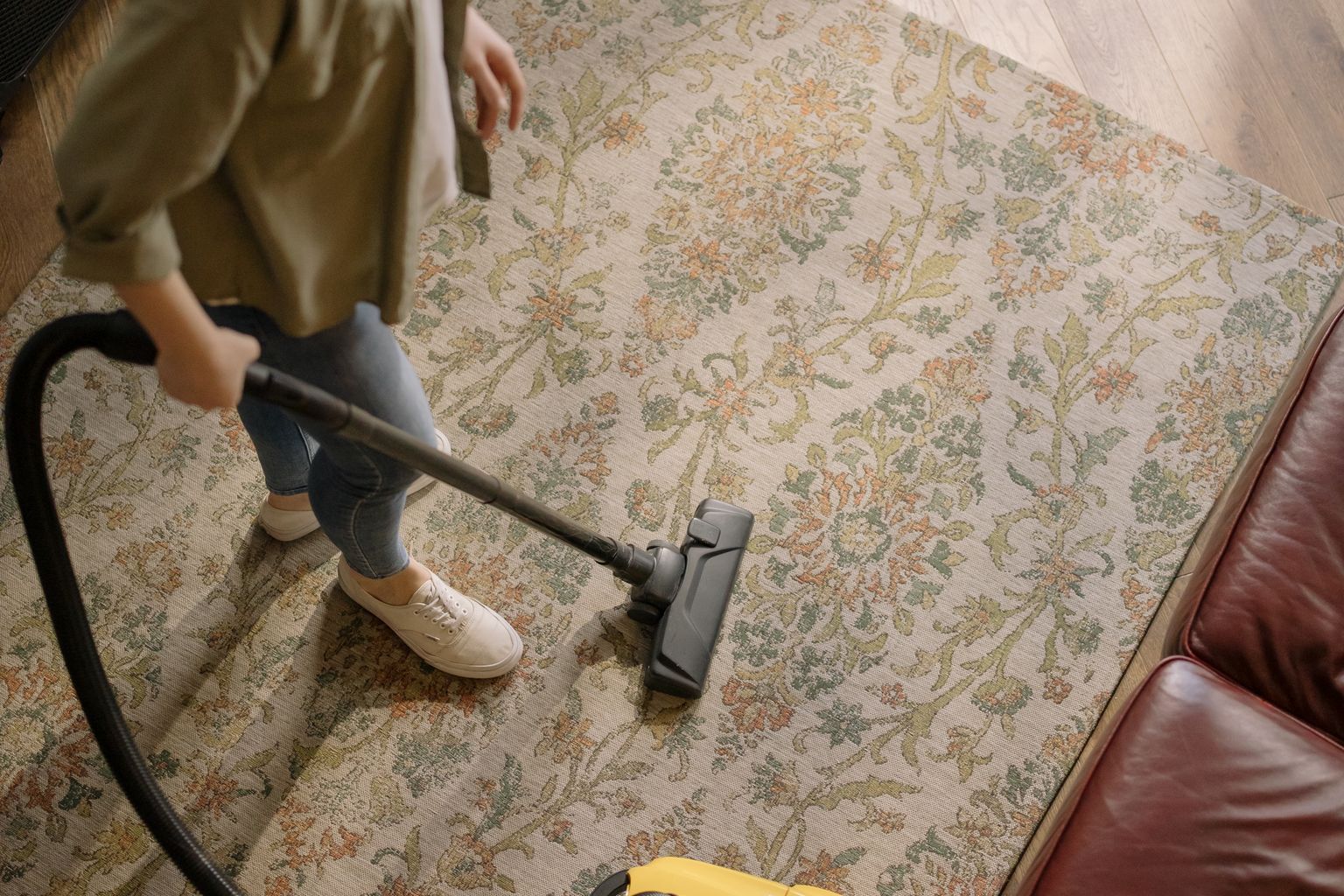
Almost all of this happens before there is a problem. Work through it in order:
- Photograph everything at move-in. Dated photos and video of every room, with close-ups of existing stains, worn patches and seams. Fill in the move-in checklist and keep your signed copy.
- Read the pet clause before you sign. Find out whether you are paying a deposit, a fee or monthly rent, and whether the lease requires professional cleaning at move-out.
- Treat accidents the same day. An enzyme cleaner breaks down the proteins in pet urine, which is what stops the odor returning once the padding dries. Blotting with water pushes it deeper.
- Put rugs and mats where the traffic is. Entryways, food bowls and the window spot your cat has claimed take the most punishment.
- Get the carpet professionally cleaned before you leave, if the lease asks for it, and keep the receipt. A landlord cannot charge you twice for work you paid for.
- Ask for a walk-through before move-out. Seeing the unit with the landlord lets you fix small things yourself rather than pay contractor rates.
- Give your forwarding address in writing. Deposit statements go to your last known address, so a missing address is an easy way to lose your chance to object.
Coverage Options That Can Pay for Pet Damage
Three products get suggested for this, and each protects a different party.
Pet damage endorsements and standalone pet damage policies. The closest thing to real coverage for a ruined carpet. Availability varies by carrier and state and the per-incident limits are modest, so read the limit and the exclusions first.
Deposit replacement and surety products. These let you pay a monthly or one-time fee instead of a lump-sum deposit, and they protect the landlord rather than you. The National Consumer Law Center says so in its May 2026 report, Tenant Insecurity. These products are sold to tenants as a way to move in without a large upfront payment “while still providing financial protection to the landlord,” and the fees are nonrefundable. If your pet ruins the carpet, the provider can still come after you for what it pays out.
Pet insurance. This covers your animal’s medical care. The NAIC calls it the equivalent of health insurance for an animal, sold as accident-only, accident and illness, or wellness plans. A few insurers add a third-party liability option, useful if your renters policy restricts your breed, but the core product does not pay for property damage.
If Your Landlord Charges You for Carpet Damage
Ask for the paperwork, in writing, and go in order:
- Request the itemized statement and the receipts or estimates behind every line. Many states require both, and a charge with no documentation is the easiest kind to challenge.
- Compare it against your move-in photos. Damage that was already there when you arrived is not yours to pay for.
- Ask for depreciation to be applied. If the carpet had years of use on it before you moved in, ask how the useful life was calculated.
- Dispute in writing and keep a copy. Renters in r/Renters make the point that a landlord has to prove damage went beyond normal wear and tear, so put the burden back where it belongs.
- Escalate if the answer is no. Your state attorney general’s consumer division, a local tenant program or small claims court are the usual next steps.
This is general information rather than legal advice, so check your state’s rules before you file anything.
How to Add a Pet to Your Renters Insurance
Call your insurer and tell them you have a pet, including its species, breed and any bite history. Most carriers add it to the policy over the phone in a few minutes, and some adjust the premium.
Leaving it out is the expensive option. An insurer that learns about an undisclosed dog at claim time can deny the claim, and in some cases void the policy, on the grounds that the risk was misrepresented when you applied.
While you are on the call, ask what your liability limit is. Given what a serious bite claim now averages, the standard $100,000 is thin, and raising it usually costs a few dollars a month.
The Bottom Line
Renters insurance protects you from what your pet does to other people, and leaves what your pet does to the carpet entirely to you. The real protection is paperwork: dated move-in photos, a lease you have actually read, and a written record of anything you dispute. Those three things decide how much of your deposit you see again. Sort them out before you move in, not in the last week of the lease.
Frequently Asked Questions
Q1: Does Renters Insurance Pay for Pet Damage?
A: Not for damage to your rental unit or your own belongings, because standard policies exclude property damage caused by animals you own. The one place pets are covered is liability, which responds when your pet injures another person or damages property belonging to someone else.
Q2: Does Renters Insurance Cover Carpet Damage That Isn’t From a Pet?
A: It depends who owns what. Damage to the landlord’s carpet from a burst pipe is the landlord’s repair, handled by their building policy. Your policy covers your own belongings, so a ruined rug of yours could be claimed if a covered peril caused it.
Q3: Are Stains on Carpet Normal Wear and Tear?
A: Generally no. The Washington tenant guide lists a rug worn thin by ordinary use as normal wear, but stains and odors caused by pets, spills or leaks as damage. Fading and flattened traffic paths are wear. A urine stain is a charge your landlord can defend.
Q4: What Are Three Things Renters Insurance Usually Doesn’t Cover?
A: Pet damage to the rental unit, flood damage and earthquake damage. The Texas Department of Insurance confirms renters policies “don’t cover losses due to floods,” and the California Department of Insurance says earthquake protection needs a separate policy. All three are standard exclusions.
Q5: Will Renters Insurance Cover Me if My Dog Bites Someone?
A: Usually yes, through personal liability and medical payments to others, up to your limit. Triple-I puts typical limits at $100,000 to $300,000 and the 2025 average claim at $65,450. Breed restrictions and bite history can change the answer, so confirm your dog is disclosed and accepted.
Q6: Does Renters Insurance Cover Damage My Cat Does?
A: The same rules apply as for dogs. Cat urine in the carpet, clawed doorways and shredded blinds are pet damage to the landlord’s property, and come out of your deposit. If your cat damages a neighbor’s belongings, liability coverage may respond up to your limit.
Q7: Can a Landlord Charge Me for a Whole New Carpet?
A: Often not. In many states a landlord can only charge the remaining useful life of the carpet, so an older carpet costs you a fraction of replacement. A carpet already past its useful life may not be chargeable at all. Ask how the figure was calculated.