

Published: October 14, 2026 | Last updated: November 3, 2026
Disclaimer: This is general information, not tax or legal advice; rules and figures change, so check current IRS and FinCEN guidance or a tax professional before you file.
If you’re a US citizen, green card holder or H-1B worker living in the US with money in a bank back home, you’ve probably run into two acronyms that sound like the same thing. They aren’t. The short answer to FBAR vs FATCA is this: the FBAR (FinCEN Form 114) is a report filed with the Treasury’s Financial Crimes Enforcement Network once your foreign accounts together top $10,000 at any point in the year, while FATCA reporting means Form 8938, which goes to the IRS with your tax return and only kicks in at much higher balances, starting at $50,000 for a single filer living in the US. Plenty of people have to file both, and filing one never excuses you from the other. Below we’ll walk through who files what, the thresholds for the 2026 tax year (the forms you file in 2027), which assets count, and the penalties that make this worth getting right.
Thresholds, deadlines and penalty amounts in this guide were checked on irs.gov and fincen.gov in November 2026.
What is the difference between FBAR and FATCA?
The FBAR FATCA difference comes down to four things: the agency, the threshold, the assets covered, and how you file.
The FBAR comes from the Bank Secrecy Act, a 1970 anti-money-laundering law. It goes to FinCEN, not the IRS, and it only cares about foreign financial accounts: bank accounts, brokerage accounts, mutual funds, and cash-value insurance policies held at institutions outside the US.
FATCA, the Foreign Account Tax Compliance Act, passed in 2010 as part of the HIRE Act. For individuals, its reporting piece is IRS Form 8938, the Statement of Specified Foreign Financial Assets. It’s broader in what it covers (foreign stock you hold directly and foreign partnership interests count) but it has much higher thresholds. FATCA also has a second half you never see: it requires foreign banks to report accounts held by Americans directly to the IRS. That’s a big reason why some banks abroad ask for your Social Security number or refuse US clients altogether.
Here’s the FATCA vs FBAR side-by-side, based on the IRS’s own comparison of Form 8938 and FBAR requirements:
| Rule | FBAR (FinCEN Form 114) | FATCA (Form 8938) |
|---|---|---|
| Law | Bank Secrecy Act (1970) | FATCA (2010) |
| Filed with | FinCEN, separately from your tax return | IRS, attached to Form 1040 |
| Who files | US citizens, green card holders, residents for tax purposes (including most H-1B workers), and domestic entities, trusts and estates | “Specified individuals” (citizens, resident aliens, some nonresidents) and certain domestic entities |
| Threshold | Over $10,000 combined at any time in the year | $50,000 to $600,000, depending on filing status and where you live |
| What’s covered | Foreign financial accounts only | Foreign accounts plus other foreign financial assets |
| Signature authority alone | Reportable | Not reportable |
| Deadline | April 15, 2027 for 2026 accounts, automatic extension to October 15, 2027 | Your tax return due date, including extensions |
| Need to file a tax return? | No, the FBAR stands alone | Only filed if you have to file a return |
Who needs to file an FBAR?

You need to file an FBAR if you’re a US person with a financial interest in, or signature authority over, one or more foreign financial accounts, and the combined maximum value of those accounts went over $10,000 at any time during the calendar year.
That word “combined” catches a lot of people out. Say you keep $4,000 in a savings account in India, $3,500 in a UK current account, and $3,000 in a Canadian brokerage account. No single account is over $10,000, but together they hit $10,500, so all three get reported. And it’s the highest balance during the year, not the December 31 figure. A one-week spike from a property sale or a family transfer is enough.
The FBAR applies to “US persons,” and that isn’t only citizens. It also covers green card holders and anyone who is a US resident for tax purposes under the IRS substantial presence test. Most H-1B, L-1 and other work-visa holders who have spent most of the year in the US meet that test, so they file an FBAR just like a citizen, even if their accounts in India or elsewhere only hold savings from before they moved. Students on F-1 visas are different: they’re usually “exempt individuals” whose days don’t count toward the test for up to five calendar years, so many don’t count as US persons yet.
Does signature authority count for the FBAR?
Yes. If you can sign on an account you don’t own, like your employer’s foreign operating account or an elderly parent’s bank account in their home country, it generally goes on your FBAR. There are exceptions for certain officers and employees of regulated companies, but the default assumption should be that it counts. Form 8938 is different here: signature authority alone doesn’t create a FATCA reporting obligation.
How do you file the FBAR?
You file it online through FinCEN’s BSA E-Filing System. There’s no fee, and you don’t need special software. For each account you list the institution, address, account number, and the maximum value during the year, converted to US dollars using the Treasury’s year-end exchange rate. Keep your account records for five years, since FinCEN can ask for them.
What is FATCA reporting on Form 8938?
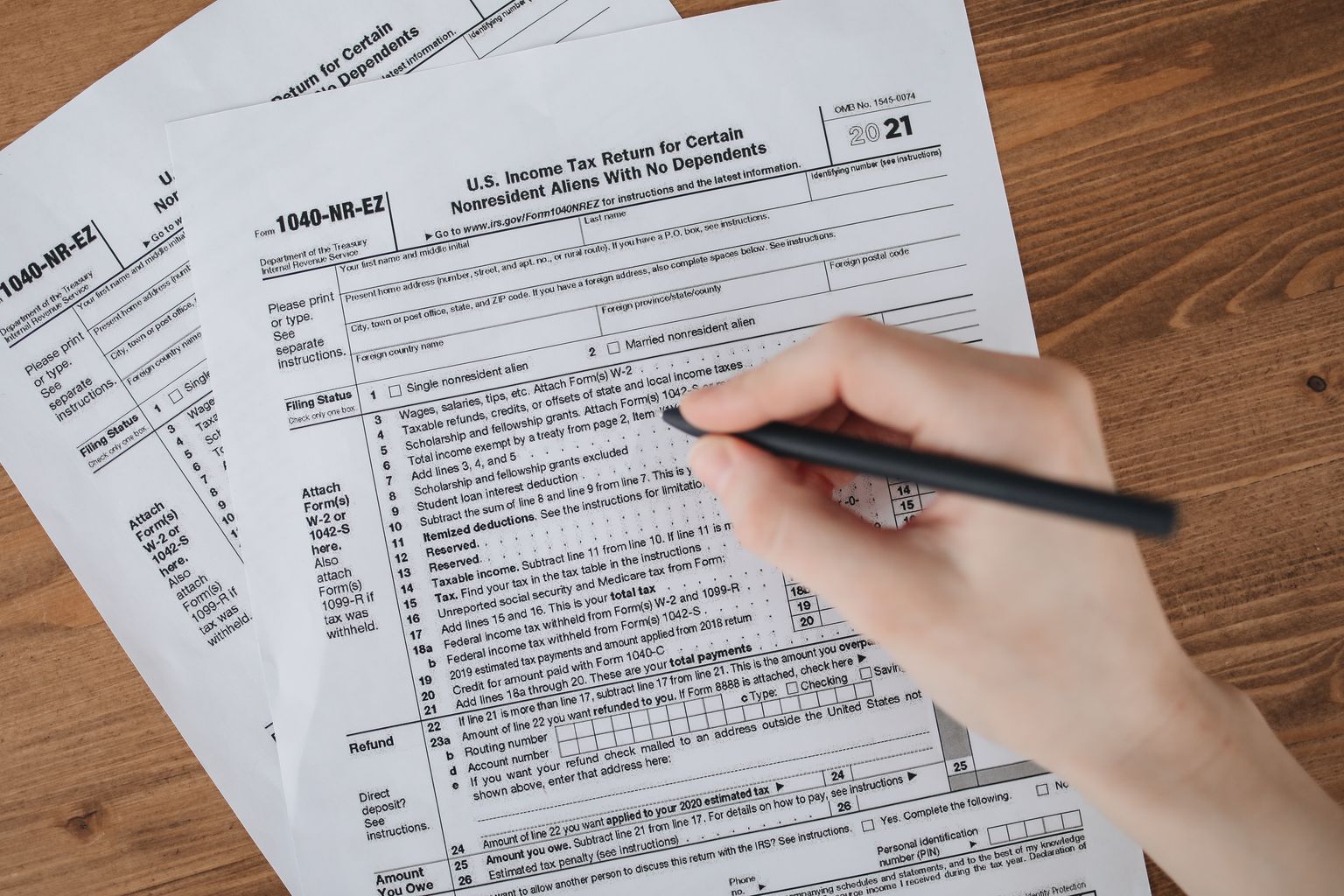
Form 8938 is the FATCA form, and unlike the FBAR it doesn’t go through a separate website. It’s filed as part of your Form 1040. For each foreign account or asset you list where it’s held, its highest value during the year, and any income it produced, then point to where that income appears on your return. Most tax software brings up Form 8938 once you say you have foreign accounts.
Because Form 8938 only exists as part of a tax return, there’s nothing to file if your income is low enough that you don’t need to file a return that year. The FBAR works differently: it’s due whenever your accounts pass $10,000, whether or not you file taxes.
What is the FATCA threshold for the 2026 tax year?
The Form 8938 thresholds are set by statute and haven’t changed in years. They depend on two things: whether you’re married filing jointly and whether you live in the US or abroad.
| Your situation | Value on the last day of the year is more than | Or value at any time in the year is more than |
|---|---|---|
| Living in the US, single or married filing separately | $50,000 | $75,000 |
| Living in the US, married filing jointly | $100,000 | $150,000 |
| Living abroad, single or married filing separately | $200,000 | $300,000 |
| Living abroad, married filing jointly | $400,000 | $600,000 |
You file if you cross either column. To count as “living abroad,” you generally need to meet the bona fide residence test or be physically outside the US for at least 330 full days in a 12-month period.
What is the FBAR limit for married filing jointly?
There isn’t a separate one. The FBAR threshold is $10,000 no matter how you file your taxes. Each spouse looks at the accounts they have an interest in. If you own joint accounts, a spouse can sometimes be covered by the other spouse’s FBAR, but only if specific conditions are met (including that all the spouse’s reportable accounts are joint with the filing spouse), and both spouses sign FinCEN Form 114a, which you keep with your records, so one FBAR covers both. When in doubt, both of you file. It costs nothing.
Which assets count for FBAR vs FATCA?
This is where the two forms really split. The FBAR is narrow, accounts only. Form 8938 reaches assets that aren’t sitting in an account.
| Asset | FBAR | Form 8938 |
|---|---|---|
| Foreign bank and brokerage accounts | Yes | Yes |
| NRE / NRO savings accounts (India) | Yes | Yes |
| Fixed deposits at a foreign bank (FDs) | Yes | Yes |
| Indian PPF account | Depends, see note | Depends, see note |
| Indian EPF / foreign employer pension | Depends, see note | Yes |
| Wise / Revolut multi-currency balance | Depends, see note | Depends, see note |
| Account at a foreign branch of a US bank | Yes | No |
| Foreign mutual funds | Yes | Yes |
| Foreign cash-value life insurance or annuity | Yes | Yes |
| Foreign stock held directly (not in an account) | No | Yes |
| Interest in a foreign partnership | No | Yes |
| Foreign hedge funds and private equity funds | No | Yes |
| Foreign real estate you own directly | No | No |
| Foreign currency or precious metals held directly | No | No |
| Foreign government pension like social security | No | No |
Note on “Depends”: the IRS and FinCEN don’t name PPF, EPF, or e-money balances like Wise and Revolut. Whether they count depends on whether the provider is a foreign financial institution and the holding is a financial account, and the Form 8938 instructions treat interests in foreign pension plans as reportable assets. Check with a tax professional for your own accounts.
So a house in Portugal you own in your own name goes on neither form. Shares in a family company in Germany that you hold directly go on Form 8938 but not the FBAR. Your Toronto chequing account goes on both.
If you keep money in India, watch out for separate accounts at the same bank. An NRO savings account and a fixed deposit at that bank are two different accounts, so list both on your FBAR and add their highest balances together for the $10,000 test. The same goes for an NRE account you opened alongside them.
A note on crypto: FinCEN said in Notice 2020-2 that an account holding only virtual currency isn’t currently reportable on the FBAR, and it has said it plans to change that rule. If you hold coins on a foreign exchange, which is one of the trade-offs we touch on in our crypto vs stocks comparison, check the current guidance each year before you file.
Do foreign mutual funds trigger other tax forms?
Yes, often. Most mutual funds and ETFs based outside the US count as PFICs (passive foreign investment companies), which usually means filing Form 8621 on top of the FBAR and Form 8938. PFIC tax rules are harsh and complicated, so see our guide What is a PFIC? before you file. Some foreign trusts, and certain foreign pension or savings plans that the IRS treats as trusts, can also require Form 3520, although Rev. Proc. 2020-17 exempts many tax-favored foreign retirement plans. Because these rules depend on the details, talk to a tax professional.
When are the FBAR and Form 8938 due?
The FBAR is due April 15 for the prior calendar year, and FinCEN gives everyone an automatic six-month extension to October 15. You don’t have to request it. For accounts you held in 2026, the FBAR is due April 15, 2027, with the automatic extension running to October 15, 2027.
Form 8938 is due whenever your tax return is due, extensions included. For most people living in the US that’s April 15, or October 15 with an extension. Americans living abroad get an automatic two-month extension to June 15 and can request more time on top of that.
| Form | Due | Extension |
|---|---|---|
| FBAR (FinCEN 114), 2026 accounts | April 15, 2027 | Automatic to October 15, 2027 |
| Form 8938, living in the US | With your 2026 return, April 15, 2027 | October 15, 2027 if you extend your return |
| Form 8938, living abroad | June 15, 2027 (automatic) | October 15, 2027 on request |
What are the penalties for not filing FBAR or FATCA?
The penalties are the main reason this topic scares people, and they’re not small.
FBAR penalties are adjusted for inflation every year. Under FinCEN’s January 2025 adjustment, the latest one published as of November 2026, the maximum civil penalty for a non-willful violation is $16,536, and a willful violation can cost the greater of $165,353 or 50% of the account balance, according to the Federal Register notice. Willful cases can also bring criminal charges. One piece of good news came from the Supreme Court in Bittner v. United States (2023): non-willful penalties apply per report, not per account. Before that ruling, someone with ten unreported accounts could face ten separate penalties for a single year.
Form 8938 penalties start at $10,000 for failing to file. If you still don’t file after the IRS notifies you, another $10,000 is added for every 30 days, up to an extra $50,000. On top of that, underpaid tax tied to undisclosed foreign assets can draw a 40% accuracy penalty, and the IRS gets more time to audit your return.
What if you missed filing in past years?
Don’t panic, and don’t just quietly start filing this year and hope nobody looks back. The IRS has formal programs for this. If your failure wasn’t willful, the Streamlined Filing Compliance Procedures and the Delinquent FBAR Submission Procedures often let people catch up with reduced or no penalties. Which one fits depends on whether you owe unreported tax and where you live, so this is a good moment to talk to a tax professional who handles expat or international returns.
| Situation | Usual route | Link |
|---|---|---|
| Missed FBARs, but reported all income and paid all tax | Delinquent FBAR submission (file the late FBARs with an explanation) | IRS options page |
| Missed FBARs and unreported foreign income, not willful, living in the US | Streamlined Domestic Offshore Procedures | IRS page |
| Same, but living outside the US | Streamlined Foreign Offshore Procedures | IRS page |
This comes up a lot for people who moved to the US on a work visa and didn’t know accounts back home had to be reported.
Do you have to file both FBAR and FATCA?
Often, yes. The FBAR and FATCA reporting requirements overlap but don’t replace each other, and the IRS is clear that filing Form 8938 doesn’t relieve you of the FBAR requirement.
A quick way to think about it:
- Over $10,000 in foreign accounts but under your Form 8938 threshold: file the FBAR only.
- Over your Form 8938 threshold: file both, and list your foreign accounts on each.
- Under $10,000 in foreign accounts but holding other foreign assets (like directly held foreign stock) above your 8938 threshold: file Form 8938 only.
For five worked situations (joint accounts, living abroad, family company shares and more), see Form 8938 vs FBAR: who must file both.
For example, Priya, a single US citizen in Austin whose Mumbai savings account peaked at $28,000 in 2026 and ended the year at $26,000, files an FBAR but not Form 8938, because she stayed under both the $50,000 year-end and $75,000 any-time thresholds. If that account had hit $80,000 at any point, she’d file both.
One more thing: reporting isn’t the same as taxing. Interest and dividends earned abroad are taxable in the US regardless of these forms, and they go on your return the same way domestic income does. Foreign retirement accounts are their own tangle too, and they rarely get the tax breaks you’d get from US accounts like the ones in our Roth IRA vs 401(k) guide.
Conclusion
The FBAR vs FATCA question has a simple core. The FBAR is a FinCEN report for foreign accounts that together pass $10,000. FATCA’s Form 8938 is an IRS form for a wider set of foreign assets, with thresholds that start at $50,000 and go much higher for people living abroad. They use different rules, different deadlines, and different systems, and lots of Americans with money overseas need to file both. Check your highest combined balance for the year first, compare it against both thresholds, and file early rather than relying on the October 15, 2027 extension. For more plain-English guides on taxes, saving, and investing, keep an eye on Da Finance Blog.
This guide is general information for the 2026 tax year, not tax or legal advice. Rules and figures change, so check current IRS and FinCEN guidance or speak with a tax professional before you file.
Frequently Asked Questions
Q1: Is FATCA the same as FBAR?
A: No. The FBAR (FinCEN Form 114) is filed with FinCEN under the Bank Secrecy Act. FATCA reporting for individuals is Form 8938, filed with the IRS on your tax return. The thresholds, covered assets and deadlines are different.
Q2: Does the IRS see my FBAR?
A: Yes. The FBAR is filed with FinCEN, but the IRS has been delegated the authority to enforce it and can access the reports. Assume the IRS can see both forms.
Q3: Do I need to file an FBAR if I don’t owe any US tax?
A: Yes, if your foreign accounts passed $10,000 combined. The FBAR obligation is separate from your tax bill and from whether you need to file a tax return.
Q4: What is the difference between FinCEN 114 and Form 8938?
A: FinCEN 114 is the official name of the FBAR. Form 8938 is the FATCA form. The 114 covers foreign accounts over $10,000 combined; the 8938 covers a broader list of foreign assets at higher thresholds.
Q5: Do I report foreign real estate on FBAR or FATCA?
A: Not if you own it directly. Property held in your own name goes on neither form. If you own it through a foreign company, the company interest may need to go on Form 8938.
Q6: Who has to file FATCA Form 8938?
A: US citizens, resident aliens and certain nonresident aliens who must file a tax return and whose specified foreign financial assets pass the threshold for their filing status and where they live, plus certain domestic entities.
Q7: Is FATCA mandatory for bank accounts?
A: Yes, for the banks. FATCA requires foreign banks to report accounts held by US persons to the IRS, which is why they ask for a W-9 or a FATCA self-declaration. You still file Form 8938 yourself if you’re over the threshold.
Q8: Do H-1B visa holders have to file an FBAR?
A: Yes, usually. If you meet the substantial presence test you’re a US resident for tax purposes, so foreign accounts over $10,000 combined must be reported, including accounts you opened before moving.
Q9: What is the FBAR threshold for 2026?
A: $10,000. It’s the combined highest balance of all your foreign accounts at any point during 2026. The figure isn’t adjusted for inflation and is the same for single and married filers.



5 comments
[…] bank accounts back home, your reporting duties don’t stop the day you’re laid off. Our FBAR vs FATCA guide explains which forms apply to foreign […]
[…] A PFIC held in a foreign brokerage can count toward your FBAR and Form 8938 thresholds, which our FBAR vs FATCA guide explains in plain […]
[…] accounts outside the US, neither software will remind you of every reporting rule, so read up on FBAR vs FATCA before you file. You’ll find more plain-English tax and money guides on Da Finance […]
[…] Everything the person owned or controlled at death goes into the gross estate: the home, bank and brokerage accounts, 401(k)s and IRAs, business interests, vehicles, and the full death benefit of any life insurance policy the person owned. If you’ve been weighing a Roth IRA vs 401k for retirement, it’s worth knowing that both count in full here. Foreign accounts count too, the same ones you’d list on an FBAR or FATCA filing. […]
[…] with FinCEN, separate from your taxes. Form 8938 is a FATCA form attached to your Form 1040. Our FBAR vs FATCA guide covers the background on both laws; here’s the side-by-side, drawn from the IRS comparison of […]