
Published: October 9, 2026
DeFi, short for decentralized finance, is a system of financial services such as lending, borrowing, trading, and earning interest that runs on blockchain networks instead of banks or brokerages. Anyone with an internet connection and a crypto wallet can use it, and the rules are enforced by software called smart contracts rather than by a company.
If that sounds abstract, don’t worry. Most people feel the same way the first time they hear it. So if you’ve been wondering what is DeFi and whether it’s something you should care about, let’s break it down the way you’d explain it to a friend over coffee.
What Is DeFi in Simple Terms?
Think about what a bank actually does. It holds your money, lends some of it out, charges interest, and keeps records. You trust the bank to do all of that honestly.
DeFi takes the same basic ideas and replaces the bank with code. Instead of a loan officer approving your request, a smart contract (a self-executing program on a blockchain) checks the rules and either processes the transaction or doesn’t. There’s no branch, no business hours, and no one deciding whether you’re “qualified” based on your paperwork.
Most activity today happens on Ethereum, though other blockchains like Solana, Avalanche, and Base host plenty of DeFi apps too.
How Does DeFi Work?
DeFi runs on three main building blocks:
- Blockchains — public ledgers that record every transaction so nobody can quietly rewrite history
- Smart contracts — programs that automatically carry out an agreement when conditions are met
- Crypto wallets — apps that let you hold assets and connect to platforms (often called dApps, short for decentralized applications)
Here’s a simple example. Say you want to lend out some of your crypto and earn interest. You connect your wallet to a lending protocol, deposit your funds into a smart contract, and the protocol pays you interest funded by people who borrow from that same pool. You never fill out an application or wait for approval.
What Can You Do With DeFi?
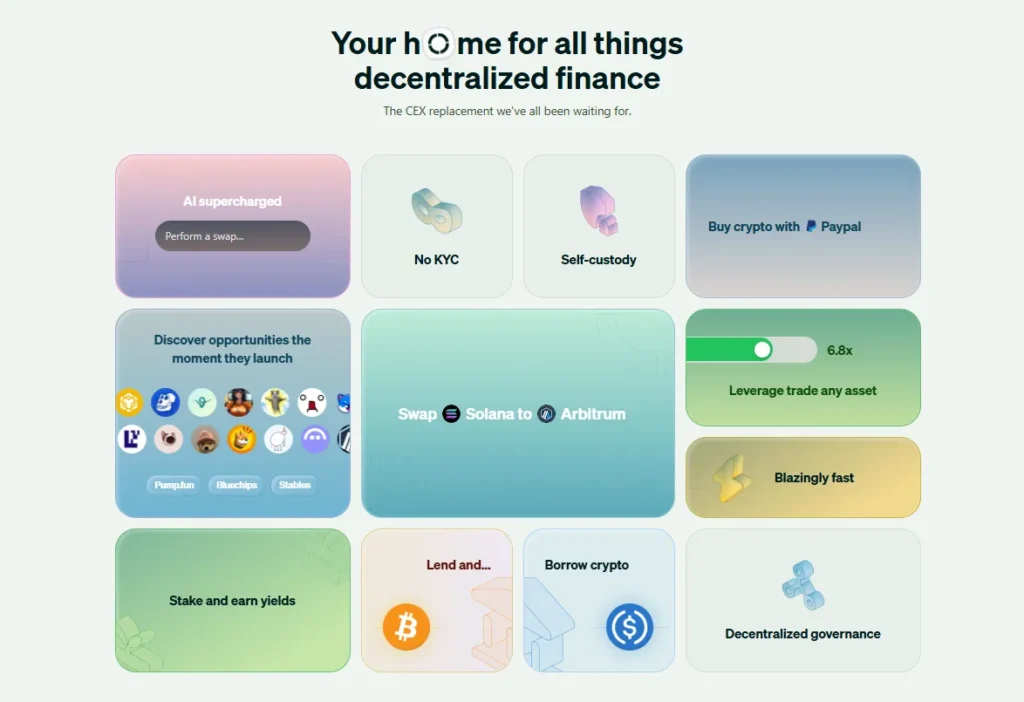
They covers a lot of ground. The most common uses include:
- Lending and borrowing — Earn interest by supplying crypto, or borrow against assets you already hold
- Trading on decentralized exchanges (DEXs) — Swap one token for another directly from your wallet without creating an account
- Staking — Lock up certain cryptocurrencies to help secure a network and earn rewards
- Yield farming and liquidity pools — Provide funds that others trade against, earning a share of the trading fees
- Stablecoins — Crypto tokens designed to hold a steady value, usually tied to the US dollar, which many apps use as their base currency
What Is the Difference Between DeFi and Traditional Finance?
This is where you gets interesting, and where the trade-offs show up too.
| Feature | Traditional Finance (TradFi) | Decentralized Finance (DeFi) |
|---|---|---|
| Who’s in charge | Banks, brokerages, and regulators | Smart contracts and the protocol’s community |
| Access | Requires ID, credit checks, and approval | Open to anyone with a wallet and internet |
| Hours | Business hours, with settlement delays | Runs 24/7, with settlement often in minutes |
| Transparency | Records kept privately by institutions | Transactions visible on public blockchains |
| Fraud and error protection | FDIC insurance, chargebacks, customer service | Generally none; mistakes are usually permanent |
| Regulation | Heavily regulated | Evolving and often unclear |
The takeaway: DeFi gives you more control and openness, but it also hands you more responsibility. If you send funds to the wrong address or sign a malicious transaction, there’s no help desk to call.
Why Do People Use DeFi?
People are drawn for a few reasons:
- Access — Roughly 1.4 billion adults worldwide are unbanked, according to World Bank data, and DeFi only needs a phone and internet connection
- Control — You hold your own funds rather than leaving them with a third party
- Speed and flexibility — Transactions can settle in minutes, any time of day
- Potential returns — Some protocols have offered yields higher than traditional savings accounts, though higher returns almost always mean higher risk
What Are the Risks of DeFi?
Any honest guide to DeFi has to cover this part. The technology is genuinely innovative, but it’s also young and unforgiving.
- Smart contract bugs — If there’s a flaw in the code, hackers can exploit it, and funds have been drained from major protocols this way
- Price volatility — Crypto prices can swing dramatically, and if you’ve borrowed against volatile collateral, your position can be liquidated quickly
- Scams and rug pulls — Anyone can launch a DeFi project, and some are designed to disappear with users’ money
- No safety net — Unlike bank deposits, DeFi funds aren’t protected by FDIC insurance
- User error — Lose your seed phrase or approve the wrong transaction, and recovery is usually impossible
- Regulatory uncertainty — US rules around DeFi are still developing, which can affect how platforms operate and how your activity is treated
A good rule of thumb many experienced users follow: never put in more than you can afford to lose, and start small while you’re learning.
Is DeFi Legal in the United States?
Using is generally legal for US residents, but the rules around it are still taking shape. The IRS treats cryptocurrency as property, which means selling, trading, or earning crypto can create taxable events. Regulators like the SEC and CFTC have also been actively debating how existing securities and commodities laws apply to platforms. Because the landscape keeps changing, it’s worth checking current guidance or speaking with a tax professional before making significant moves.
How Do You Get Started With DeFi Safely?
If you’re curious and want to explore, here’s a sensible path:
- Learn the basics first. Understand wallets, gas fees, and how blockchains work before putting money in.
- Set up a reputable wallet. Write down your seed phrase on paper and store it somewhere safe. Never share it with anyone.
- Start with a small amount. Treat your first transactions as practice.
- Stick with established protocols. Look for platforms that have operated for a while and have been independently audited.
- Double-check every transaction. Verify addresses and permissions before you confirm anything.
- Keep records. Save transaction histories for tax time.
Final Thoughts
Now that you know what is DeFi and how it works, you can see why it’s one of the most talked-about shifts in how money can work, and understanding it is a smart first step whether you ever use it or not. It offers openness and control that traditional finance doesn’t, but it also asks more of you in return. Go slow, stay skeptical of anything promising guaranteed returns, and treat learning as part of the process.
Disclaimer: This article is for informational and educational purposes only and does not constitute financial, investment, tax, or legal advice. Cryptocurrency and DeFi involve substantial risk, including the potential loss of all invested funds. Nothing here is a recommendation to buy, sell, or hold any asset or to use any specific platform. Laws and regulations change, so consult a licensed financial advisor or tax professional before making any decisions.
Frequently Asked Questions About DeFi
Q1: What does DeFi stand for?
A: DeFi stands for decentralized finance, meaning financial services that run on blockchain networks without a central authority like a bank.
Q2: Is DeFi safe?
A: DeFi carries real risks, including smart contract bugs, scams, and price volatility, and it has no government insurance protection. Using established platforms and starting with small amounts can reduce, but not eliminate, that risk.
Q3: Do you need a lot of money to start with DeFi?
A: No. Many DeFi apps have no minimum deposit, though network fees (called gas fees) can make very small transactions less practical, especially on busier blockchains.
Q4: What is the difference between DeFi and cryptocurrency?
A: Cryptocurrency is the digital asset itself, like Bitcoin or Ether. DeFi is the ecosystem of financial apps built on blockchains that use those assets for lending, trading, and more.
Q5: Is DeFi taxable in the US?
A: Generally, yes. The IRS treats crypto as property, so trading, selling, or earning rewards can trigger taxes. Consult a qualified tax professional for guidance specific to your situation.
Q6: Can you lose money in DeFi?
A: Yes, and sometimes all of it. Hacks, scams, market crashes, and user mistakes have all caused significant losses. Only use money you can afford to lose.



3 comments
[…] with a token worth close to nothing. If you’re exploring decentralized finance, our guide on what DeFi is and how it works covers the basics you should understand before touching new […]
[…] you’re curious about the wider crypto world beyond buying coins, our explainer on what DeFi is and how it works covers decentralized finance and its […]
[…] represent fractional ownership in publicly traded companies. When you purchase a stock, you acquire an ownership interest in that […]